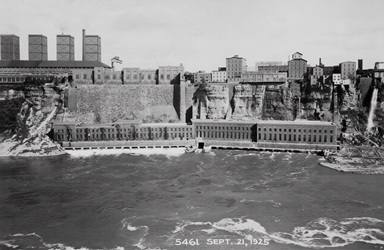
You can see the ruins of one of Niagara’s earliest hydroelectric plants on the American side of the Niagara River, just below the fallsz: the Schoellkopf Power Station.
In the late 1800s, Niagara Falls was not only a natural wonder, it was quickly becoming a center of industry. The immense power of the falling water made it an ideal location for generating electricity, and engineers began developing ways to harness that energy on a large scale.
The Schoellkopf Power Station was one of the first major projects to do exactly that. Built along the base of the Niagara Gorge, the station used tunnels carved deep into the rock to channel water from above down to turbines below, transforming the force of the river into electricity.
As demand for power grew, the facility expanded into a massive complex, supplying energy to nearby factories and helping turn Niagara Falls into one of North America’s early industrial hubs.
But the very location that made the plant so effective also made it vulnerable.
The station was built into the rock of the Niagara Escarpment, where constant water flow and natural erosion slowly weakened the structure over time. The cliffs and rock layers, shaped over thousands of years, were not entirely stable under the pressure of heavy industrial use.
By the mid-20th century, hidden structural weaknesses had begun to develop deep within the rock behind the plant.
On June 7, 1956, what began as a small seepage in the back wall of the station quickly turned into a disaster.
Throughout the day, the problem worsened. By around 4:00 p.m., the floor of the plant had started to buckle under pressure. Within the hour, the entire back wall gave way.
With a thunderous roar, hundreds of tons of rock, concrete, and debris collapsed into the Niagara River below, destroying nearly two-thirds of the power station.
Inside the plant, 40 workers scrambled to escape. Most made it out in time. Tragically, one man did not survive.
The destruction was massive, with damages estimated at approximately $100 million at the time.
Following the collapse, what remained of the Schoellkopf facility was deemed unsafe. Portions of the structure continued to fall into the gorge, and much of the site was eventually demolished.
The Niagara Mohawk Power Corporation, which owned the plant, was able to restore a small portion of the original structure temporarily. However, the focus quickly shifted to a larger, safer, and more modern facility.
Within a few years, hydroelectric production moved to the newly constructed Robert Moses Niagara Power Plant, which remains one of the primary sources of hydroelectric power in the region today.
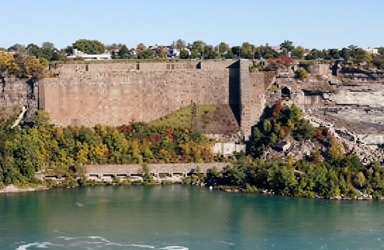
Today, only remnants of the Schoellkopf Power Station can be seen. Sections of the rock face and tunnels carved into the escarpment still remain as a reminder of what once stood here.
Above the site, visitors can explore the Schoellkopf Geological Museum, which tells the story of Niagara’s geological history and early hydroelectric development.
In 2013, the Maid of the Mist boat company began using the base of the old power station site as a winter docking area. This protects their boats from ice damage during the colder months.
Niagara Falls is often seen as a place of natural beauty, but it is also a place of powerful industry and engineering ambition.
The story of the Schoellkopf Power Station shows both sides: the incredible potential of harnessing nature, and the risks that come with it.
It’s a reminder that even the most advanced structures must respect the forces that shaped this landscape.
From natural wonders to powerful stories of industry and innovation, Niagara is full of history that most visitors never see.
Join us on our guided Niagara Falls tour and experience the places, stories, and hidden details that bring this region to life.

Best Niagara Falls tour in Canada for 20 years.


