Today, Niagara Falls is known for its incredible hydroelectric power.
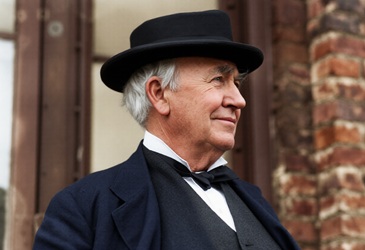
But long before electricity flowed from the Falls to cities across North America, one inventor helped change the way people imagined power itself...Thomas Edison.
Born in Ohio in 1847, Edison became one of the most famous inventors in history.
He earned the nickname “The Wizard of Menlo Park” for his inventions and experiments, eventually holding more than 1,000 patents.
Among his best-known inventions were:
But Edison wasn’t just trying to invent a light bulb.
He wanted to create an entire electrical system that could power cities.
In 1879, Edison publicly demonstrated his incandescent light bulb for the first time.
He famously said:
“We will make electricity so cheap that only the rich will burn candles.”
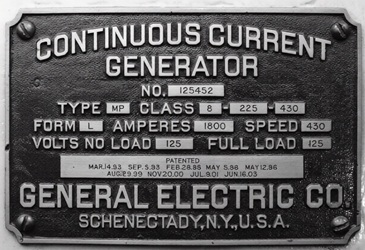
Soon after, Edison developed a system for distributing electricity using Direct Current, better known as DC power.
In New York City, his company built one of the world’s first electrical generating stations, bringing electric lighting to customers in lower Manhattan.
At the time, it was revolutionary.
There was one major issue.
Edison’s DC system only worked efficiently over short distances.
That meant power plants had to be located close to the people using the electricity. Large cities could make it work, but smaller communities and rural areas could not.
And that’s where Niagara Falls entered the picture.
By the late 1800s, inventors and engineers realized Niagara Falls had enormous hydroelectric potential.
The challenge wasn’t generating electricity.
The challenge was sending it long distances.
Another inventor, Nikola Tesla, had been developing a different system known as Alternating Current, or AC power.
Unlike Edison’s DC system, AC electricity could travel much farther using thinner, less expensive wires.
That made Niagara Falls the perfect testing ground.
The debate between Edison’s DC system and Tesla’s AC system became known as the “War of Currents.”
It was one of the biggest technological rivalries of the era.
When hydroelectric power stations were eventually developed at Niagara Falls, AC power proved to be the better option for transmitting electricity over long distances.
That success helped shape the modern electrical grid we still use today.
Even though Edison’s DC system was ultimately limited, his work laid the foundation for the electrical age.
Without his inventions, public demonstrations, and investment in electric lighting, the massive hydroelectric projects at Niagara Falls might not have happened the way they did.
In many ways, Niagara Falls became part of the story that transformed electricity from an experiment into everyday life.
Niagara’s history isn’t just about waterfalls. It’s also about innovation, engineering, and the people who helped shape the modern world.
Join us on a guided tour from Toronto and discover the stories that bring Niagara Falls to life along the way.

Best Niagara Falls tour in Canada for 20 years.


